


Table of Contents

Table of Contents
Key Takeaways
- Federal and California trucking regulations set strict safety standards for drivers, vehicles, and carriers.
- Violations of rules like hours-of-service limits, mandatory inspections, and strict cargo securement requirements can result in severe accidents.
- California often imposes stricter requirements than federal law.
- In a personal injury case, proving a violation of these regulations can help establish fault and strengthen the claim.
- Redkey Gordon Law uses its experience with trucking regulations and evidence preservation to help clients build strong, well-documented truck accident claims.
If you’ve been injured in a crash with a commercial truck in California, you may be questioning who is actually liable. The answer often depends on whether the driver and the trucking company followed specific state and federal regulations.
Answering that question depends on records that may already be at risk. Evidence like driver logs, electronic logging device data, and inspection reports can be overwritten or destroyed quickly, often before you have even finished medical treatment.
At Redkey Gordon Law, we represent truck accident victims across Stockton and San Joaquin County. We understand the state and federal regulations that govern commercial trucking, and we know how violations become the evidence that builds a case.
Understanding Trucking Regulations After a California Crash
Commercial trucks can weigh up to 80,000 pounds and take far longer to stop than the passenger vehicles around them. When something goes wrong, the people they share the road with bear most of the consequences.
According to the National Safety Council, California experiences the second-highest number of fatal truck accidents in the country. In 2023, California recorded 392 deaths in crashes involving large trucks.
That scale of risk is why both federal and California regulators require commercial trucks to meet detailed standards for:
- Driver qualifications
- Driving hours
- Vehicle maintenance
- Cargo handling
- Insurance
When a driver or carrier fails to meet those standards, the violation can shape the fault analysis in a personal injury claim.
Federal vs. California Trucking Laws: How the System Works
Commercial trucks on California roads operate under two overlapping sets of rules:
- Federal regulations set by the Federal Motor Carrier Safety Administration (FMCSA)
- California-specific regulations enforced by the California Highway Patrol (CHP) and the California Department of Motor Vehicles (DMV)
The federal framework establishes the baseline standards for trucking laws. California then adopts most of those federal rules, adding layers of stricter requirements.
A crash on California roads may involve violations of either framework, both, or neither. Because of this extra layer of legal complexity, having an experienced truck accident attorney on your side can help simplify your case and preserve important evidence relating to the applicable regulations.
Federal Regulations That Apply to Commercial Trucks
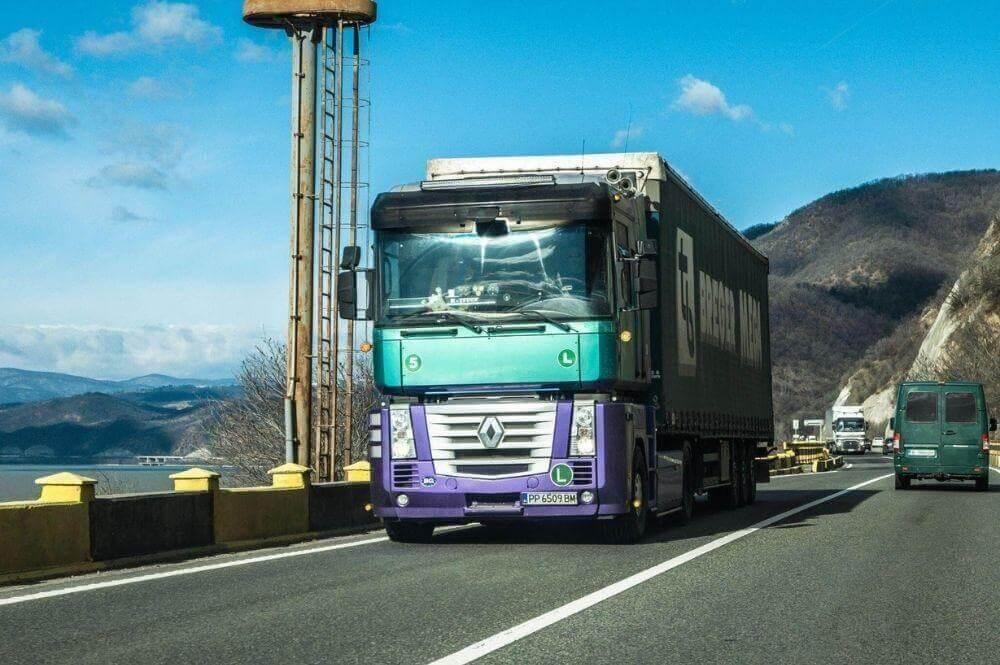
Federal trucking rules set the standard that drivers and carriers must meet, and they create the records that show whether those standards were followed. For a person injured in a crash, those records often determine whether their claim moves forward.
Hours of Service Rules and Driver Fatigue
The Federal Motor Carrier Safety Administration identifies driver fatigue as a leading factor in serious commercial truck crashes. Federal hours of service rules address that risk by limiting how long a driver can stay behind the wheel. These rules include:
- Maximum driving time: Up to 11 hours of driving after 10 consecutive hours off duty
- 14-hour limit: Driving must occur within a 14-hour window after coming on duty
- Required breaks: A 30-minute break after 8 consecutive hours of driving
- Weekly limits: No more than 70 total driving hours over an 8-day period
FMCSA’s Large Truck Crash Causation Study found that driver fatigue was associated with approximately 13% of serious large-truck crashes. That is why federal enforcement treats hours of service as a priority and why driver logs are typically among the first records an attorney requests.
Every commercial truck must carry an electronic logging device that records hours of service data automatically. If a driver was beyond the legal limit at the time of a crash, that record exists, and an attorney can move to preserve it before it is overwritten.
CDL Requirements and Driver Qualification Standards
Every truck driver must hold a valid commercial driver’s license meeting FMCSA minimums. As of 2022, these include:
- Physical examination
- Knowledge testing
- Standardized training from a registered provider (for new CDL applicants)
- Skills testing
If a trucking company hires or keeps a driver who does not meet these requirements, it may be legally responsible. The company’s own driver qualification files typically show whether those standards were met.
Drug and Alcohol Testing Requirements
FMCSA rules require all commercial drivers to submit to drug and alcohol testing at several points:
- Pre-employment testing before a carrier hires a driver
- Random testing throughout the year
- Post-accident testing after any crash that meets federal thresholds
- Reasonable-suspicion testing when a supervisor observes signs of impairment
- Return-to-duty testing after a violation
The federal Drug and Alcohol Clearinghouse tracks every required test result. After a crash, investigators can review these records for violations such as positive results, refusals, or skipped post-accident testing.
If a driver failed a test or if a carrier put that driver back on the road without completing the return-to-duty process, those decisions can become evidence in a personal injury claim.
Vehicle Inspections and Maintenance Records
Federal law requires drivers to complete a pre-trip inspection before each run and a driver vehicle inspection report (DVIR) at the end of every day the driver operates. Carriers must keep those reports on file, repair defects that affect safe operation, and document the repairs.
When a crash involves a mechanical failure, the DVIRs and maintenance records for that truck are often among the first documents an attorney subpoenas.
Cargo Securement Rules
FMCSA cargo securement rules set specific requirements for how freight must be loaded, tied down, and distributed. These rules include:
- Minimum tie-down counts
- Working load limits
- Commodity-specific standards
When cargo is not properly secured, it can shift during transit, creating an unbalanced load that increases the risk of rollover or jackknife crashes. When that happens, the condition of the cargo often becomes key evidence in determining whether a securement violation contributed to the accident.
Federal Insurance Minimums
Federal regulations require interstate commercial trucks to carry minimum liability insurance based on the cargo they transport. Most general freight carriers must carry at least $750,000 in coverage, while carriers transporting hazardous materials in bulk must carry up to $5 million.
California incorporates these federal insurance minimums for interstate carriers, while layering additional state-specific safety and operational requirements on top. Those added rules often play a significant role in how liability is evaluated after a crash.
California-Specific Trucking Regulations
California builds on that federal regulation foundation, adding its own enforcement structure and safety requirements.
Each of the following state rules, and any violations of them, can come up as evidence in a truck crash investigation.
Truck Speed Limit
Because heavy and towing vehicles need significantly greater stopping distances, California sets a lower speed limit for them than for passenger cars. Under California Vehicle Code (CVC) § 22406, the maximum speed for trucks with three or more axles is 55 miles per hour. The same limit applies to any vehicle towing another vehicle.
That cap holds even on stretches where passenger cars are allowed to travel at 65 or 70. Crash reconstruction regularly shows speed as a contributing factor in serious truck collisions.
Right-Lane Restrictions for Commercial Vehicles
Under CVC § 21655, trucks subject to the 55 mph limit must also travel in the right lane on two-lane highways. On highways with three or more lanes in the same direction, they can use only the two right lanes.
A truck that moves into the left lane to pass and stays there has violated this rule. The crash report often documents violations of right-lane restrictions.
Meal and Rest Break Requirements
On top of the federal hours of service regulations, California requires a:
- 30-minute meal break for every five hours of work
- 10-minute rest break for every four hours
These rules generally apply to drivers operating within California, though how they apply to interstate carriers may depend on federal regulations and specific circumstances. Unfortunately, a national carrier may overlook this state-specific layer.
If a truck driver involved in an accident skips these breaks, it is a documented violation. This could also indicate the broader pressure on drivers to take shortcuts.
Biennial Inspection of Terminals (BIT) Program
Under the BIT program, the California Highway Patrol inspects commercial carriers’ terminals every two years, focusing on:
- Brakes
- Tires
- Lighting systems
When a carrier fails a California Highway Patrol truck inspection, that failure is on record. If a crash involved a mechanical problem tied to maintenance the carrier had already been directed to address, the BIT inspection record may produce evidence for your case.
Weight Limits, Size Restrictions, and Permits
California limits commercial vehicles to a gross vehicle weight of 80,000 pounds. Axle limits apply independently:
- No single axle may carry more than 20,000 pounds.
- No tandem axle combination may exceed 34,000 pounds.
- Most truck and trailer combinations may not exceed 65 feet in length.
These restrictions exist because overloaded or oversized vehicles often require significantly greater stopping distances and put more stress on brakes and tires.
In addition to these size and weight restrictions, all commercial carriers operating within California must also obtain a motor carrier permit from the California DMV. It certifies that the carrier meets insurance requirements and complies with state regulations. Operating without a valid permit can indicate a broader compliance issue and may support a personal injury claim.
Weight limits and permit compliance are not just theoretical requirements. Weigh station records and inspection logs often document violations. If a truck exceeded legal limits at the time of a crash, those records may already exist, and early action is critical to ensure they are preserved and reviewed.
Interstate vs. Intrastate Trucking: Why the Distinction Matters
Both federal and California trucking regulations can apply on California roads. While interstate carriers are primarily governed by federal FMCSA rules, they are still required to comply with certain California-specific laws when operating within the state.
- Interstate trucking involves vehicles that cross state lines. A long-haul tractor-trailer traveling through California must follow federal safety regulations as well as California-specific rules, including speed limits, lane restrictions, and permitting requirements.
- Intrastate trucking operates entirely within California and is governed by the state’s regulatory framework, which incorporates federal standards while adding stricter requirements in several areas.
This distinction matters because it determines which rules applied to the truck involved in a crash and whether the driver or carrier failed to meet both federal and California standards. In practice, some national carriers focus on federal minimums and overlook California-specific requirements, which can create additional violations that support a personal injury claim.
How Trucking Regulation Violations Can Affect Your Injury Claim
When a truck driver or company breaks a safety rule, that violation can become powerful evidence in a personal injury case. Since California is a fault-based state, evidence helps establish fault for a crash and directly impacts the amount of compensation you can claim.
What matters next is proof. Trucking companies generate detailed records, including:
- Driver logs and electronic logging device (ELD) data
- Inspection and maintenance records
- Weigh station reports and BIT inspection records
- Drug and alcohol testing results
- Driver qualification files
These records can show exactly what the driver and company did or failed to do before the crash.
However, this evidence does not last forever. Federal rules only require trucking companies to keep many of these records for a limited time. After that, they may be overwritten or permanently deleted.
Acting quickly to preserve these records can make a real difference in your personal injury claim and the compensation available to you under California law.
How a Truck Accident Lawyer Can Help Preserve Critical Evidence

Building a strong truck accident claim requires more than gathering records. It involves identifying how each piece of evidence fits into a larger legal strategy and using it to establish liability across multiple parties.
A truck accident attorney can take steps that are difficult to manage alone, including:
- Identifying all responsible parties: This may include the driver, the trucking company, the truck owner, cargo loaders, or maintenance providers.
- Uncovering overlapping insurance coverage: Commercial trucking cases often involve multiple policies, including primary, umbrella, and third-party coverage.
- Using federal and state regulations strategically: Attorneys connect violations directly to legal liability rather than treating them as isolated issues.
- Working with experts: Accident reconstruction specialists and industry experts help explain how the crash occurred and who is responsible.
- Managing insurer negotiations: Trucking insurers handle these claims every day, and experienced legal representation helps level the playing field.
From the outset, an attorney approaches the case with a focus on building leverage. That preparation can influence how insurers evaluate the claim and whether they offer a settlement that reflects the full extent of the damages.
Why Choose Redkey Gordon Law for Your Truck Accident Case
Turning those records into a strong claim is where legal strategy becomes critical. At Redkey Gordon, we are a personal injury law firm rooted in Central California. Our team has handled more than 2,000 cases for clients across Stockton and San Joaquin County, including complex truck accident claims.
We understand how to manage cases involving multiple parties, overlapping insurance policies, and detailed regulatory issues.
Committed to the Stockton Community
We are not a national firm operating from a distance. We are Stockton attorneys handling personal injury and truck accident cases for people across San Joaquin County, and we have been since 2014.
Our partner Robert Gordon is a founding board member of the Sutter Creek Community Benefit Foundation. We support the Stockton Ports and maintain a genuine investment in the communities where our clients live and work.
Recent Case Results
We have recovered more than $50 million for injury victims across Central California, including:
- $550,000 in a truck accident settlement
- $1,000,000 in a wrongful death recovery
Our results reflect a sustained commitment to pursuing fair compensation for every client we represent.
Client Testimonials
“I had a great experience working with Redkey Gordon Law after my accident. They were extremely professional, responsive, and knowledgeable throughout the entire process. They not only helped me with my injury claim but also handled the diminished value claim for my Tesla Model 3, which I didn’t even realize I was entitled to at first. They kept me informed every step of the way and made sure I understood my options. The whole process felt smooth and stress free because of their guidance. I truly felt like they had my best interest in mind and fought to get me the best possible outcome. Highly recommend them to anyone dealing with an accident or insurance claim. Thank you again for your help!” — Mohammed H.
“I had a good experience working with the legal team after a significant car accident and injury. They were very helpful and friendly and helped make a better result out of a terrible incident otherwise. Good work and very professional service.” — Ryan T.
“Robert Gordon & his team were amazing to deal with, they made this whole process which I have never gone through a breeze. Would definitely recommend for anyone to come to this law firm if involved in a car accident.” — Richard K.
Frequently Asked Questions About California Trucking Regulations
What Is the Difference Between Federal and California Truck Regulations?
Federal FMCSA regulations set baseline safety rules for interstate trucking, while California laws apply to trucks operating within the state and often impose stricter requirements, such as speed limits, lane restrictions, and permitting rules. In many truck accident cases, both apply. Identifying which rules governed the truck can help determine if violations occurred.
Can an Hours-of-Service Violation Help My Case?
Yes. Hours-of-service rules limit how long a driver can operate without rest, and violations may indicate fatigue and a breach of federal safety standards. Because driving time is recorded through electronic logging devices, these violations can often be documented and used as evidence in a personal injury claim.
How Long Do I Have to File a Claim in California?
In most cases, you have two years from the date of the accident to file a personal injury claim in California. Missing this deadline may prevent recovery, and because truck accident cases require time to gather evidence, starting early is important.
Do I Need a Lawyer If a Truck Driver Broke the Law?
You are not required to hire a lawyer, but truck accident cases often involve multiple parties, complex regulations, and large insurance policies. An attorney can connect violations to liability, identify all available compensation, and handle negotiations with insurers.
Talk to a Stockton Truck Accident Lawyer About Your Rights
After a truck accident, the decisions you make early can affect the outcome of your case. Insurance companies begin evaluating claims right away, often before the full extent of your injuries is clear. Getting the right guidance early can help you avoid costly mistakes and protect the value of your claim.
At Redkey Gordon Law, we represent truck accident victims throughout Stockton and San Joaquin County. We offer free consultations so you can understand your options and decide what steps to take next. Call us at 209-267-4778 or contact us online to speak with our team today.

Written By Jude Redkey
Jude Redkey is a founding partner of Redkey Gordon Law Corp. He previously worked as an associate in a large Sacramento firm. There, he focused exclusively on personal injury cases which included claim resolution and court litigation. Since 1998, Jude has participated in an active and prolific civil litigation practice, specializing in personal injury law.


